Ishigaki, the ferry hub of Yaeyama
Ishigaki is where most journeys in the Yaeyama Islands begin: a lively harbour town with a ferry terminal that sends boats to Taketomi, Iriomote and beyond, and an island with bays, reefs and mountains of its own.
Ishigaki lies far down the chain, about four hundred kilometres southwest of Okinawa's main island and much closer to Taiwan than to Tokyo. It is the main island of the Yaeyama group and the hub for all the others: its harbour terminal sends boats out every day to Taketomi, Kohama, Kuroshima, Hateruma and Iriomote. Many visitors use Ishigaki as a base and come back to it each evening. It is worth exploring in its own right too.
The island ferry terminal
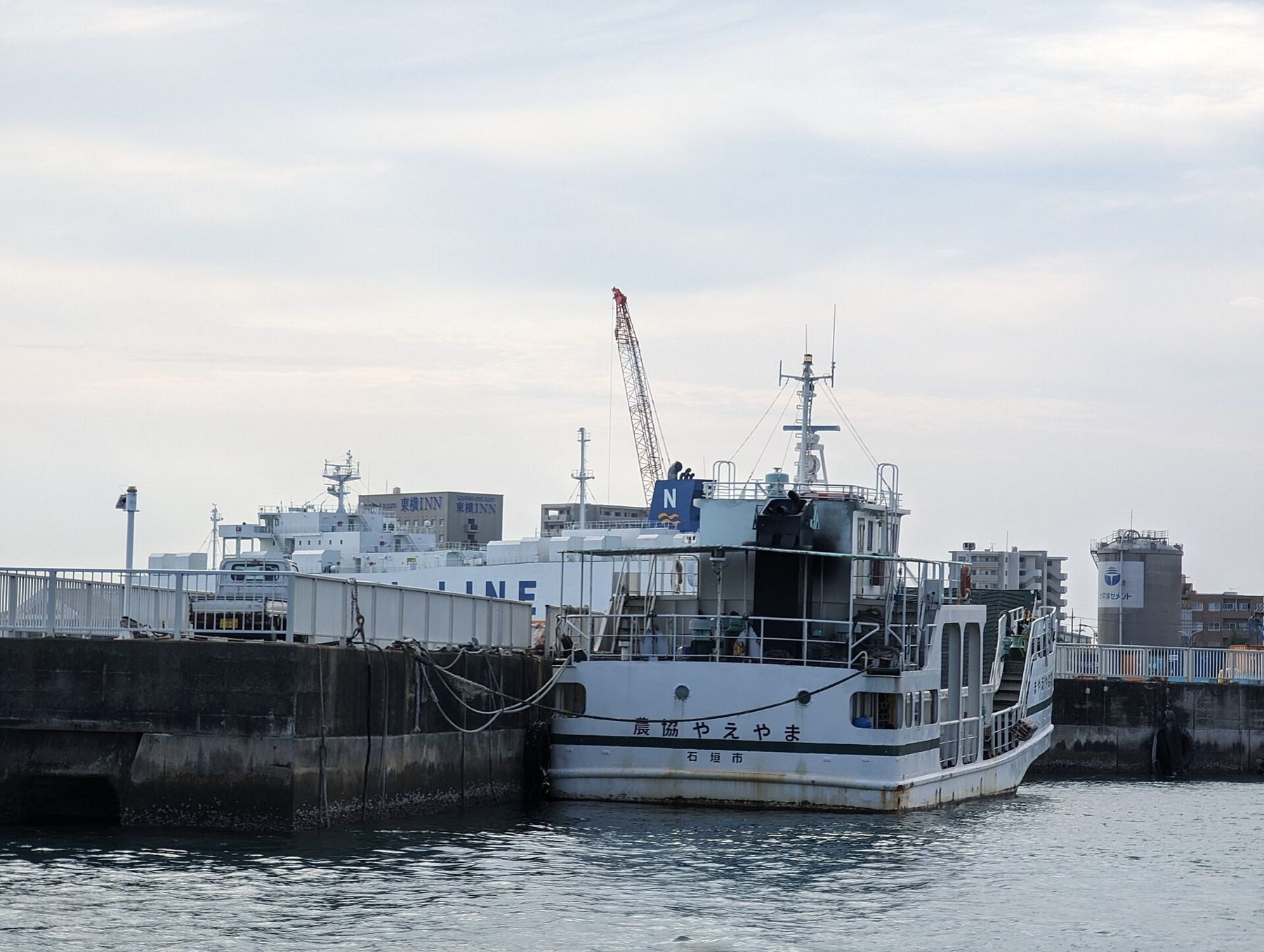
The ferry terminal for the outlying islands sits at the harbour in the centre of Ishigaki town, within walking distance of the main streets. Boats leave through the day, with the shortest crossings, to Taketomi, taking only around ten to fifteen minutes, and longer runs to Iriomote taking under an hour. Several operators run services.
Sailings are cut back or cancelled in strong winds and high seas, sometimes at short notice. Check each morning, and keep the last boat back in mind when planning a day trip. In summer and holidays, boats and island transport fill up early.
Kabira Bay
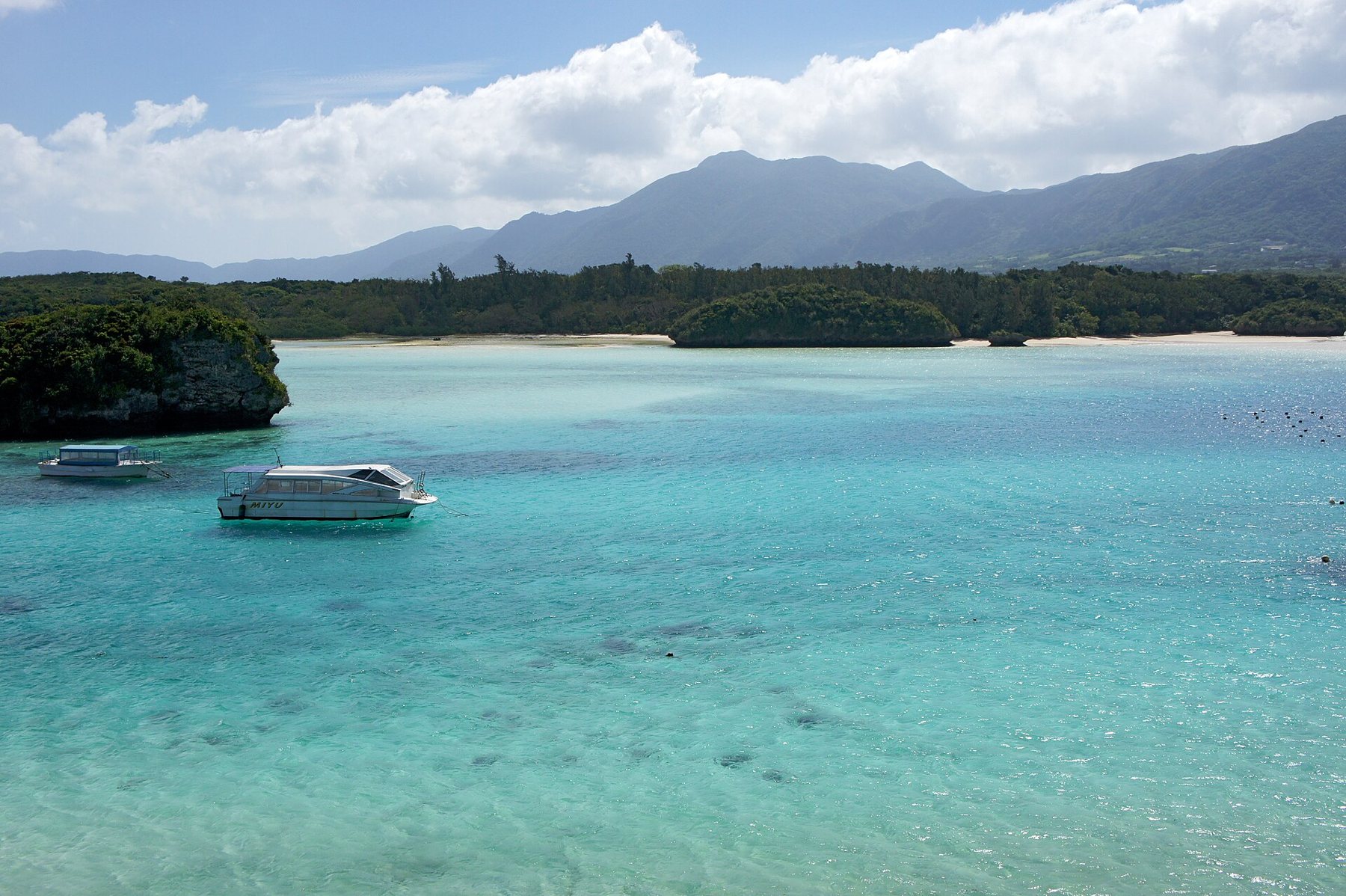
On the northwest coast, Kabira Bay is one of the most famous views in Okinawa: a sheltered bay of brilliant turquoise water dotted with small green islets. Swimming is not allowed in the bay, because of currents and the pearl farming that takes place there. Glass-bottomed boats run trips over the coral and fish, and the viewpoints above the bay give the classic panorama.
Swimming is not allowed in the bay, because of currents and the pearl farming that takes place there.
Mount Omoto and the interior
Ishigaki is hillier than Miyako. Mount Omoto, in the centre of the island, is the highest mountain in Okinawa Prefecture at a little over 500 metres, covered in forest and part of the national park. Trails climb toward the summit, and viewpoints on the island's roads look out over forest, farmland and sea. Ishigaki also has cattle farms, pineapple fields and sugarcane.
The Shiraho reef
On the southeast coast, the sea off Shiraho holds a large, well-known reef, including colonies of blue coral. Snorkelling and boat trips explore it, and the reef has been the focus of local conservation efforts. As everywhere in the islands, do not stand on or touch coral, and keep to calm conditions.
Night skies
The Yaeyama Islands are far from big cities, and on clear nights the stars are spectacular, with the Milky Way overhead in summer. Ishigaki and Iriomote lie within a national park that is known for its dark skies. Drive a little way out of town, turn off your lights and look up.
Ishigaki town
Yaeyama IslandsTaketomi: red tiles and coral wallsShort ferry from Ishigaki's terminalThe town around the harbour is small but lively, with covered shopping arcades, a public market and many places to eat. It is a good place to try Yaeyama soba, the local noodle soup. Evenings are relaxed, and the town makes an easy base for island hopping.
Yaeyama culture
The Yaeyama Islands have their own language, songs and festivals, distinct from both Okinawa's main island and Miyako. Yaeyama folk songs, sung to the sanshin, are known across Okinawa, and many festivals, especially around the harvest and the summer Obon period, feature dances and processions. If you are lucky enough to coincide with one, watch respectfully from the side.
Planning island hops
A good pattern is to stay on Ishigaki and make day trips by boat, returning each evening: Taketomi for half a day, Iriomote for a full day, Kohama or Kuroshima for quieter islands. Plan the longer trips for the calmest days, and keep a spare day in case of cancellations. Staying a night on Iriomote or Taketomi gives a different, quieter experience.
Beaches on Ishigaki
Ishigaki has beaches of its own, mostly on the north and west coasts, some with facilities and nets against jellyfish in summer, others wild and rocky. Currents can be strong at reef channels; swim only where it is safe and permitted. The coast road north of Kabira leads to quieter bays and headlands with views over the sea toward the other islands.
Ishigaki's weather can change fast. A sunny morning may give way to a heavy shower in the afternoon, especially in the rainy season and summer. Carry a light rain jacket, and plan indoor alternatives, such as the town's museums and markets, for wet hours.
Rainy days and markets
On a wet day, the town's covered arcades and public market are good places to wander, with stalls of tropical fruit, local foods and crafts. Small museums cover Yaeyama history and culture. Rain in the islands often passes quickly, so keep an eye on the sky and be ready to head out again.
Weekday sailings are usually less crowded than weekend ones.
Keep your ticket safe until you step off the boat.
Reaching Iriomote and moving about
Ishigaki's airport has flights from Naha and from several mainland cities. There is no regular passenger ferry from Okinawa's main island. On the island, buses connect the airport, the town and main sights, but a hired car gives much more freedom. Spring and autumn are the most comfortable seasons, and typhoons are a risk in late summer and early autumn.
From here, the obvious first trips are Taketomi's village and Iriomote's mangroves and waterfalls. For how boats work across the chain, see how the ferries tie the islands together.