Typhoon season: what actually happens
Typhoons are a normal part of island life in Okinawa from summer into autumn. When one comes, the islands close down, people stay indoors and everything waits. Here is what to expect.
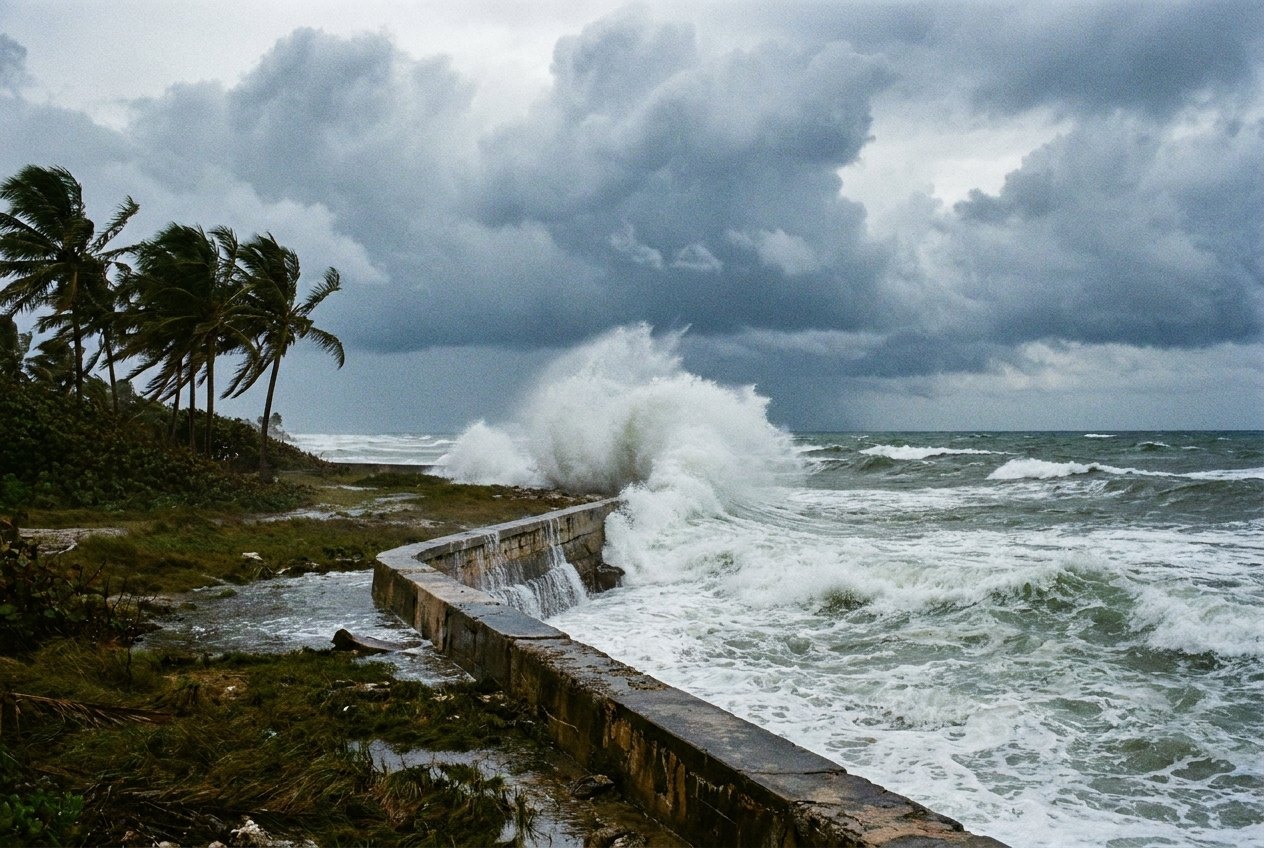
Okinawa lies in the path of many of the tropical storms that form over the western Pacific. Typhoons can pass near the islands from about June to November, with the highest risk usually in August and September. For people who live here, they are a familiar part of the year. For visitors, they mean cancelled flights and boats, closed shops and a day or two indoors. With a little preparation, they are an inconvenience rather than a danger.
How a typhoon unfolds
Typhoons are tracked for days before they arrive, and forecasts of their path are published widely. As one approaches, the weather often turns strangely calm or hot, then the wind and rain build. When warnings are issued, life on the islands shuts down in stages: ferries stop first, then flights, buses and the Naha monorail. Many shops and restaurants close, and people stay at home. The worst winds may last several hours, followed by more hours of strong wind and rain as the storm moves on.
What visitors should do
- Follow official warnings from the Japan Meteorological Agency and local authorities, available in English online.
- Stay indoors during the storm, away from windows. Do not go to the coast to watch the waves.
- Stock water, food and anything you need for a day or two before the shops close.
- Charge phones and power banks; power cuts happen.
- Bring loose items in from balconies.
- Contact your airline and accommodation about changes; many offer flexibility during typhoons.
Transport
Ferries are usually the first to be cancelled, often a day or more before the storm, and may not resume until the sea calms, which can take a day or two after the wind drops. Flights are cancelled when the storm is close and resume soon after, but backlogs can mean several days of full planes. On the small islands, this can leave visitors stuck. Build spare days into any trip in the season, and avoid planning island boats just before an international flight.
Inside during the storm
Being indoors during a typhoon is usually safe in Okinawa, where buildings are built to withstand strong winds. Concrete houses and modern hotels are designed for it. Close windows and storm shutters if there are any, stay away from glass, and keep a torch handy. Listen to the wind, read, rest. If you are told to evacuate, follow instructions immediately.
Convenience stores and supermarkets get busy before a storm as people stock up, and many close during the worst of it. Buy what you need early.
Small islands are more exposed
Across the chainHow the ferries tie the islands togetherBoats by group, flights between groupsOn small islands, the effects of a typhoon are felt longer, because boats stop early and resume late, and supplies can run low. If a typhoon is forecast while you are on a small island, consider moving to a larger one, or to the main island, while boats and flights are still running.
Reading the forecasts
Typhoon forecasts show a predicted track, with a cone of uncertainty that widens with time. A storm forecast to pass a few hundred kilometres away can still bring strong winds, rough seas and heavy rain. Watch how the forecasts change from day to day, and pay attention to local warnings rather than the distance on the map.
Japanese weather warnings are graded, from advisories through warnings to special warnings for the most dangerous conditions. When a storm warning is issued for your area, transport and businesses respond quickly. Follow what local people are doing.
If you have to travel during the season, keep in touch with your airline's notices. Airlines often announce cancellations a day in advance and allow free changes. Rebook early, as seats fill quickly once flights resume.
What happens to holidays
For a visitor, the most common effect of a typhoon is not danger but disruption: a day or two indoors, a missed boat trip, a flight moved. Most hotels and guesthouses are used to it and will help with food, information and changes. Some even keep board games for stranded guests. Keep a good book, some snacks and a sense of humour, and treat the storm day as part of the experience of island life. When the wind drops, step outside to see the clean, rinsed light that follows.
After the storm
Once the storm passes, the islands get back to normal quickly. Roads are cleared, shops reopen and people tidy up branches and debris. The sky after a typhoon is often unusually clear. Beaches may be closed for a day or two because of dangerous waves and debris, and the sea may be churned and cloudy.
Should you avoid the season?
Not necessarily. Many weeks in summer and early autumn pass without a typhoon at all, and the weather is hot, sunny and perfect for the sea. But if your trip is short, includes small islands, or connects to an important flight, the risk is real. Late autumn, winter and spring are the low-risk months.
Insurance and flexibility
Travel insurance that covers weather delays is worth considering. Flexible bookings, refundable where possible, help too. Above all, keep your plans loose in the season and treat a typhoon day as part of the island experience: a quiet day with a book while the wind roars outside.
For how boats work across the chain, see how the ferries tie the islands together. For the low-risk winter months, read humpback whales off Zamami.