Yonaha Maehama and Miyako's reef beaches
Miyako's coast is lined with beaches of fine white coral sand and water so clear it seems lit from below. Some are long and gentle, some hidden below dunes and rocks.
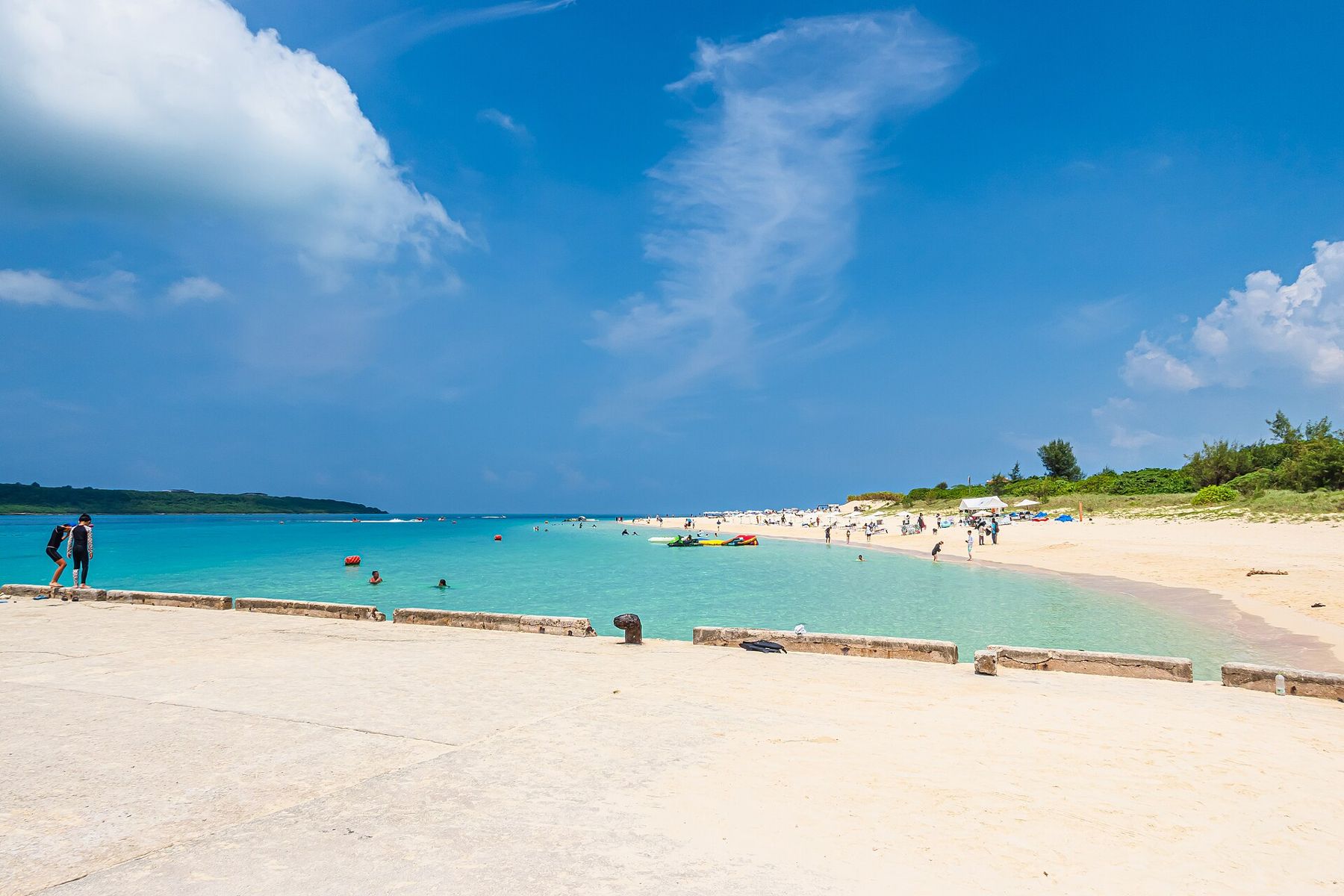
Miyakojima is often described as having the most beautiful beaches in Okinawa, and the claim is easy to understand when you see them. Coral sand, fine and pale, meets water that is clear over the shallow reef and deep blue beyond. The island's beaches vary from long, open stretches to small coves below cliffs, and most are only a short drive apart.
Yonaha Maehama
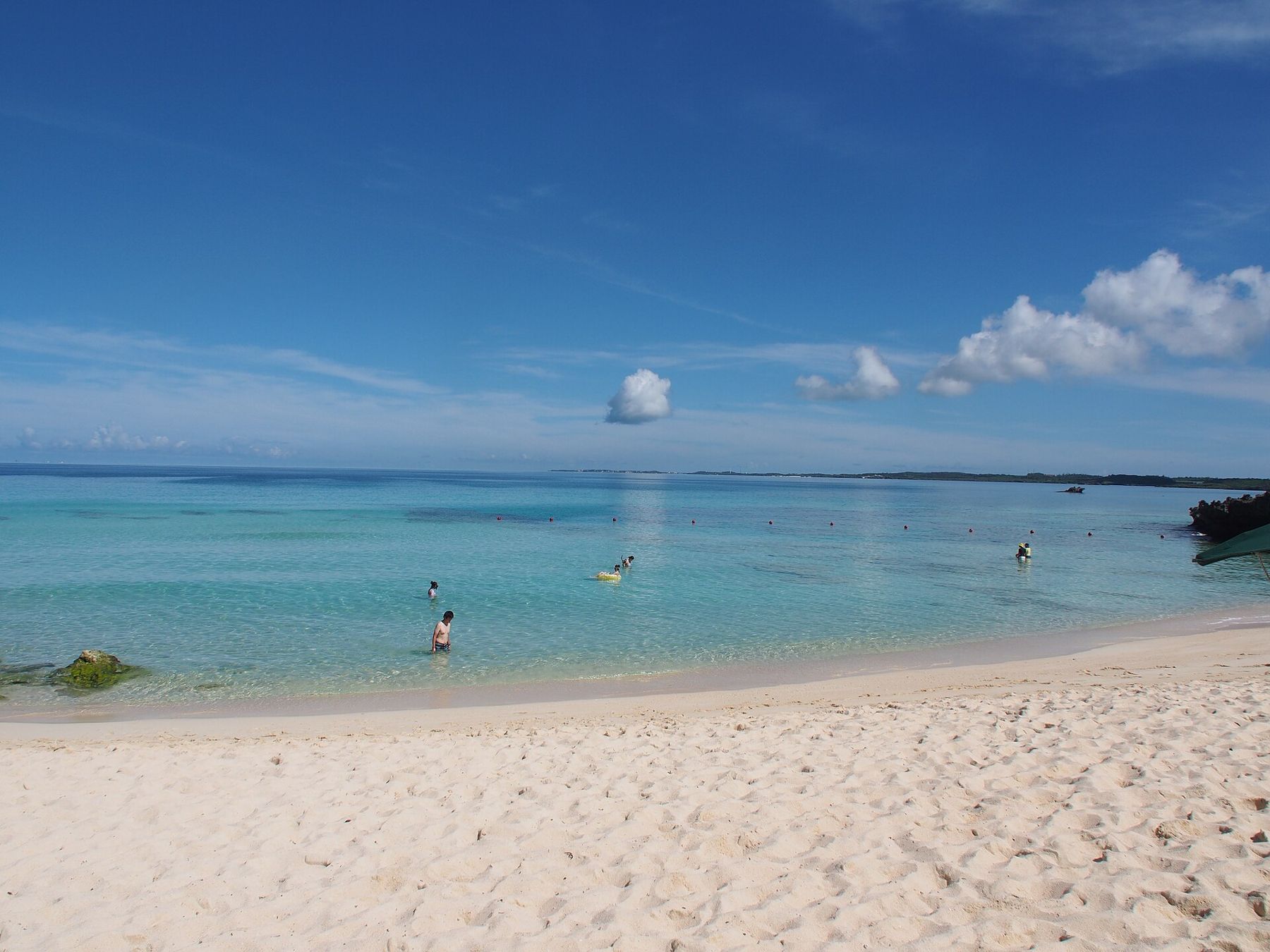
On the southwest coast, Yonaha Maehama is the best-known beach on the island, a sweep of white sand several kilometres long facing Kurima Island and its bridge. The water is shallow and calm in good weather, and the colour of the sea, from pale turquoise to deep blue, is remarkable. It is popular in summer, but long enough to find space.
Sunayama Beach
North of Miyako's main town, Sunayama Beach lies at the bottom of a high sand dune, which you walk over to reach it. Its signature is a large natural rock arch at one end of the beach, a favourite for photographs, especially in the late afternoon. Do not climb on the arch; rock falls and erosion are a real risk, and parts may be closed off.
Snorkelling bays
Several bays around Miyako have reefs close to shore, with coral and fish visible in shallow water. Snorkelling can be excellent, but conditions vary with tide and wind, and currents can be strong at reef edges and channels. Snorkel only in calm conditions, near lifeguarded areas where possible, and with a companion.
Jellyfish and safety
Box jellyfish, whose stings can be dangerous, are present in Okinawa's waters mainly in the warmer months. Many guarded beaches put up nets during the season and post warnings. Swim inside netted areas where they exist, and follow instructions from lifeguards. Vinegar is commonly kept at beaches for first aid for certain stings; seek help immediately if stung.
- Check flags and notices for swimming conditions.
- Wear water shoes on rocky and coral areas.
- Never stand on coral, and do not collect shells or coral.
- Bring shade and water: there is often little of either on the sand.
Sun and heat
The sun in Miyako is intense, even on overcast days. Cover up with a rash vest and hat, use reef-safe sunscreen, and avoid the middle of the day on open sand in summer. Many local people swim fully covered, and visitors increasingly do the same.
The beach year
The sea is warm enough for most people from about May to October. Early summer and early autumn often bring the best combination of warm water and fewer visitors. Typhoons from July to October can bring big waves and dangerous currents for days, even when the sky looks clear. In winter, the water is cooler and the wind stronger, but the beaches are almost empty and beautiful to walk.
Miyako IslandsMiyako's cape and its bridgesFlight from Naha, about fifty minutesBeaches on the bridged islands
The islands joined to Miyako by bridges have beaches of their own. Irabu and Shimoji have rocky coasts with tide pools and some sandy coves, and a well-known spot where planes once practised landings beside a remarkably clear sea. Ikema and Kurima have small beaches reached by short walks. All are easy to visit by car on the same day as the main island's beaches.
Low tide and high tide
Tides change the beaches dramatically. At low tide, wide areas of reef flat may be exposed, with pools full of small fish and creatures; at high tide, the same places are under water. Snorkelling is usually best on a rising tide in calm weather. Never walk out far on a reef flat as the tide comes in.
Snorkelling sensibly
If you are new to snorkelling, start in shallow, calm water close to the beach. Practise floating face down and breathing through the snorkel before heading toward the reef. A life vest or float makes it easier to relax and stay off the coral. Never snorkel alone, keep an eye on the shore, and get out before you are tired. Guided snorkel trips can help beginners.
Look for fish around coral heads and the edges of sand patches: parrotfish, butterflyfish, clownfish in anemones, and sometimes turtles grazing in seagrass. Move slowly and the fish will ignore you.
Some beaches have showers, toilets and changing rooms in summer; others have nothing at all. Bring water, shade and a bag for rubbish; out of season, many facilities are shut.
Quiet beaches
Away from the best-known names, Miyako and its bridged neighbours have many small beaches reached by sandy tracks through the cane fields or scrub. Some have no facilities and few visitors, even in summer. They can be magical, but take extra care: there are no lifeguards, currents can be strong, and help is far away. Tell someone where you are going, and swim only in calm conditions.
Respect local requests to keep some beaches quiet.
Leave it as you found it
Miyako's beaches are clean because people keep them that way. Take all rubbish with you, avoid single-use plastic, and be careful with sunscreens near the reef. If you see beach clean-ups, joining in for half an hour is a kind gesture.
For the island's eastern cape and its bridges, read Miyako's cape and bridges. For other reef islands in the chain, see the Kerama blue and Taketomi.