Shisa, the guardians on the roofs
Across Okinawa, pairs of lion-dogs watch from roofs, gates and walls. The shisa are protectors against evil, and they have become the islands' best-loved symbol.
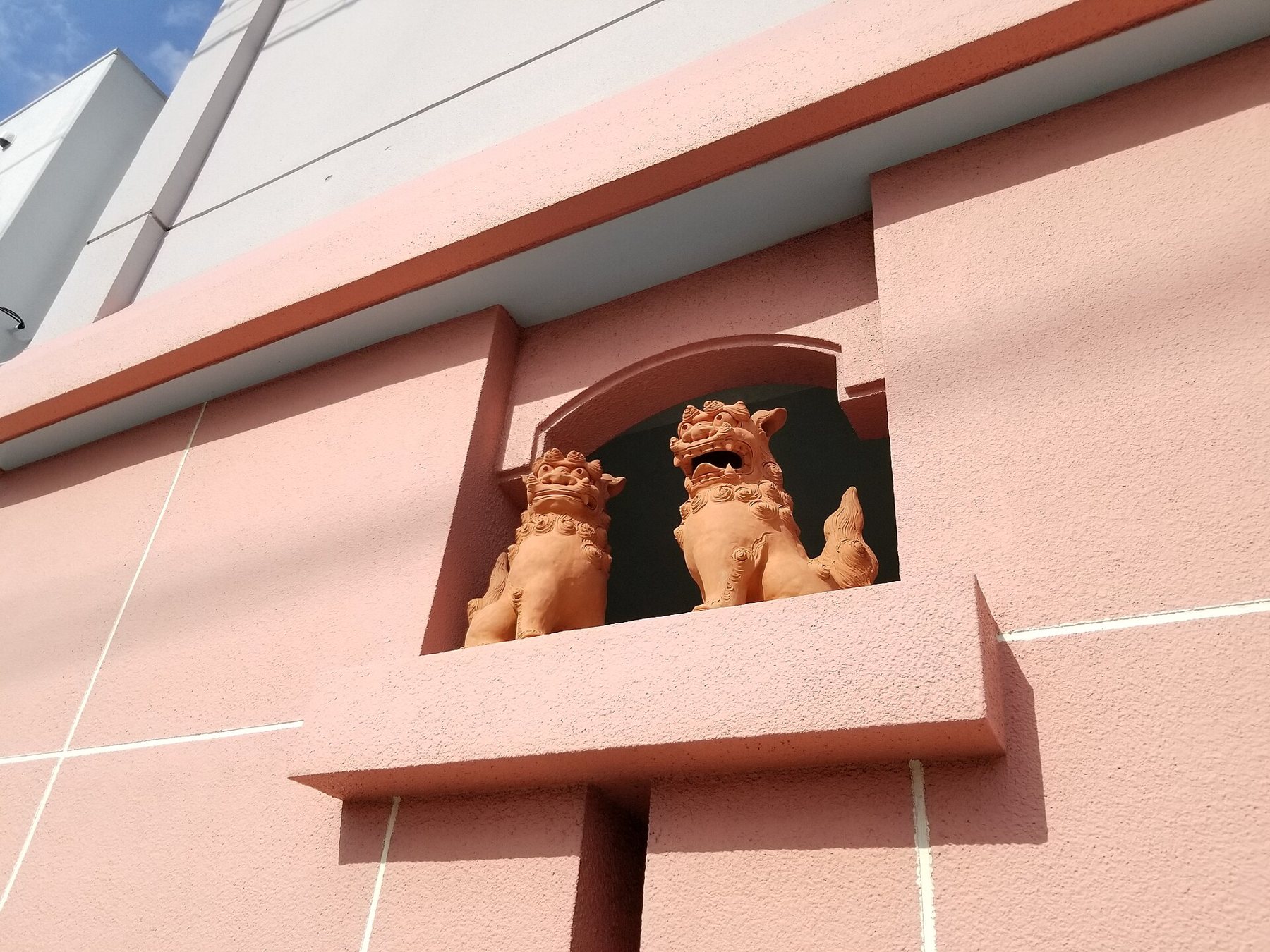
Walk down almost any street in Okinawa and look up. On rooftops, gateposts and walls, small figures of a creature that is part lion and part dog keep watch: the shisa. They are guardians, placed to ward off evil spirits and misfortune, and they come in every style from ancient stone to bright modern ceramic. Once you start noticing them, you will see them everywhere.
Origins of the guardians
Shisa are related to the guardian lions found across East Asia, especially in China, where pairs of stone lions guard the gates of palaces and temples. The idea is thought to have arrived in Okinawa through the islands' long connections with China during the Ryukyu Kingdom. At first, shisa guarded castles, tombs and villages. Later, as ordinary houses gained tiled roofs, families began placing them on their own roofs, and the shisa became a symbol of every home.
Why there are two
Shisa usually come in pairs. One has an open mouth, the other closed. A common explanation is that the open-mouthed shisa scares away evil or takes in good fortune, and the closed-mouthed one keeps good fortune in and bad out. Some people describe them as male and female. Interpretations vary from family to family and place to place, and there is no single correct answer.
Their placement matters. On gateposts, they face outward, toward the street. On roofs, they often face the direction from which bad influences were thought to come.
The oldest stone shisa
In Yaese, in the south of the main island, a large stone shisa known as the Tomori lion has stood on a hill since the late seventeenth century. It was placed there by villagers to protect against fires, which they believed came from a nearby mountain. It survived the Battle of Okinawa, though it bears marks of the fighting, and it is a protected cultural property. It is often described as the oldest surviving shisa of its kind.
Where to see them
- Tsuboya, Naha: the old pottery quarter, where many shisa are made and the roofs are full of them.
- Taketomi: almost every red-tiled roof in the village has its own shisa, many made from roof tiles and mortar.
- Shuri: stone shisa guard gates around the old capital.
- Everywhere: on houses, shops, schools and public buildings across the islands.
Styles and makers
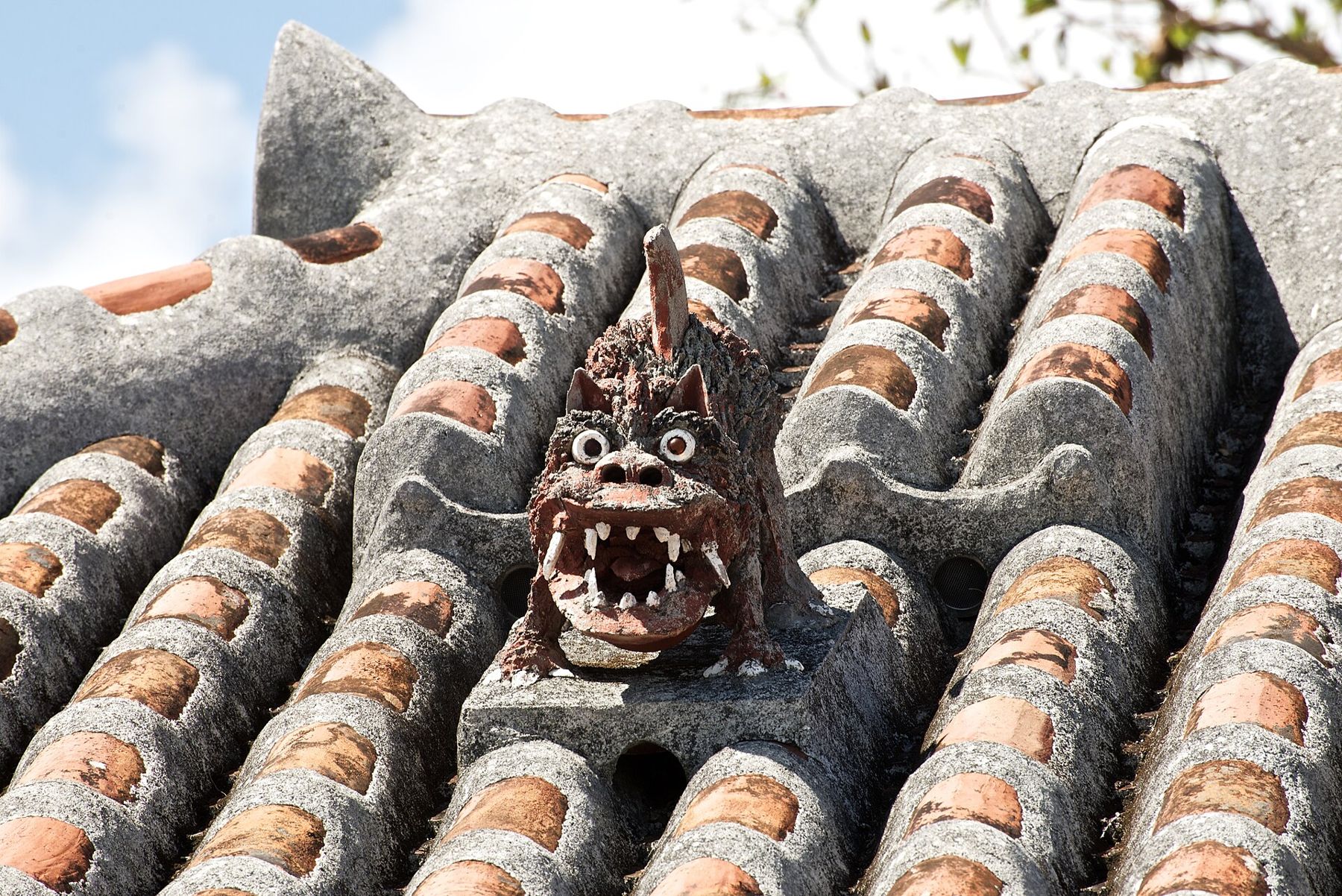
Traditional roof shisa were often made from the same tiles and mortar as the roof itself, giving them a rough, hand-built look. Others are fired clay, glazed or unglazed. Modern shisa range from fierce to cute and comic. Potters across Okinawa make them, and in some places visitors can try making their own in a workshop.
Main island, southTsuboya, Naha's pottery quarterMonorail to central NahaVillage shisa
Before shisa spread to individual roofs, some villages had large stone shisa at their entrances or on high ground, facing the direction from which danger was believed to come: fire, disease or bad influences. A few of these village guardians survive, weathered and moss-covered, still regarded with respect by local people. If you find one, look but do not climb on it or touch it carelessly.
Roof shisa up close
The classic roof shisa, made by plasterers and roofers from leftover tiles and mortar, is a folk art in its own right. Each one has its own character: some fierce, with bulging eyes and bared teeth, others sleepy or smiling. In Taketomi and in old neighbourhoods of the main island, it is fun to walk slowly and compare them.
Taking a shisa home
Many visitors buy a pair of shisa as a keepsake. If you do, place them as Okinawans do: by the door or on a shelf facing outward, the open-mouthed one usually on the right as you face out and the closed-mouthed one on the left, though customs vary. Small ceramic pairs travel well wrapped in clothes. Some people prefer to make their own at a pottery workshop, which is a fun hour on a rainy day.
Shisa in daily life
Shisa are not museum pieces. People still put them on new houses, repaint old ones, and sometimes give them small offerings. School children make them in art class. They appear on manhole covers, signs and the tails of buses. For many Okinawans, a home without a shisa looks a little unprotected.
Look out, too, for shisa on gate pillars of old family tombs and on the walls of public buildings. Some modern shisa are huge, standing at the entrances to parks and towns, while others are tiny, tucked into windowsills.
Shisa and the family home
For many families, choosing a shisa for a new house is an important moment, sometimes a gift from relatives. The pair is placed carefully, and some families say a small prayer or make an offering when it is installed. Over time, the shisa become part of the house, weathering with it through storms and years of sun.
A symbol of the islands
Today the shisa is a symbol of Okinawa itself, appearing on everything from signs to souvenirs. Behind the cheerful images, though, the old meaning remains: a guardian, watching over the house and the people inside it, as the islands have watched over each other through storms and war.
For the pottery quarter where many are made, read Tsuboya. For the village with the most famous shisa roofs, see Taketomi, and for the old capital, Shuri.