The Motobu Peninsula and Bise's fukugi lanes
Halfway up the main island, the Motobu Peninsula packs in a castle on a ridge, a village of shaded tree lanes, a long bridge to a small island and a park built for a world's fair.
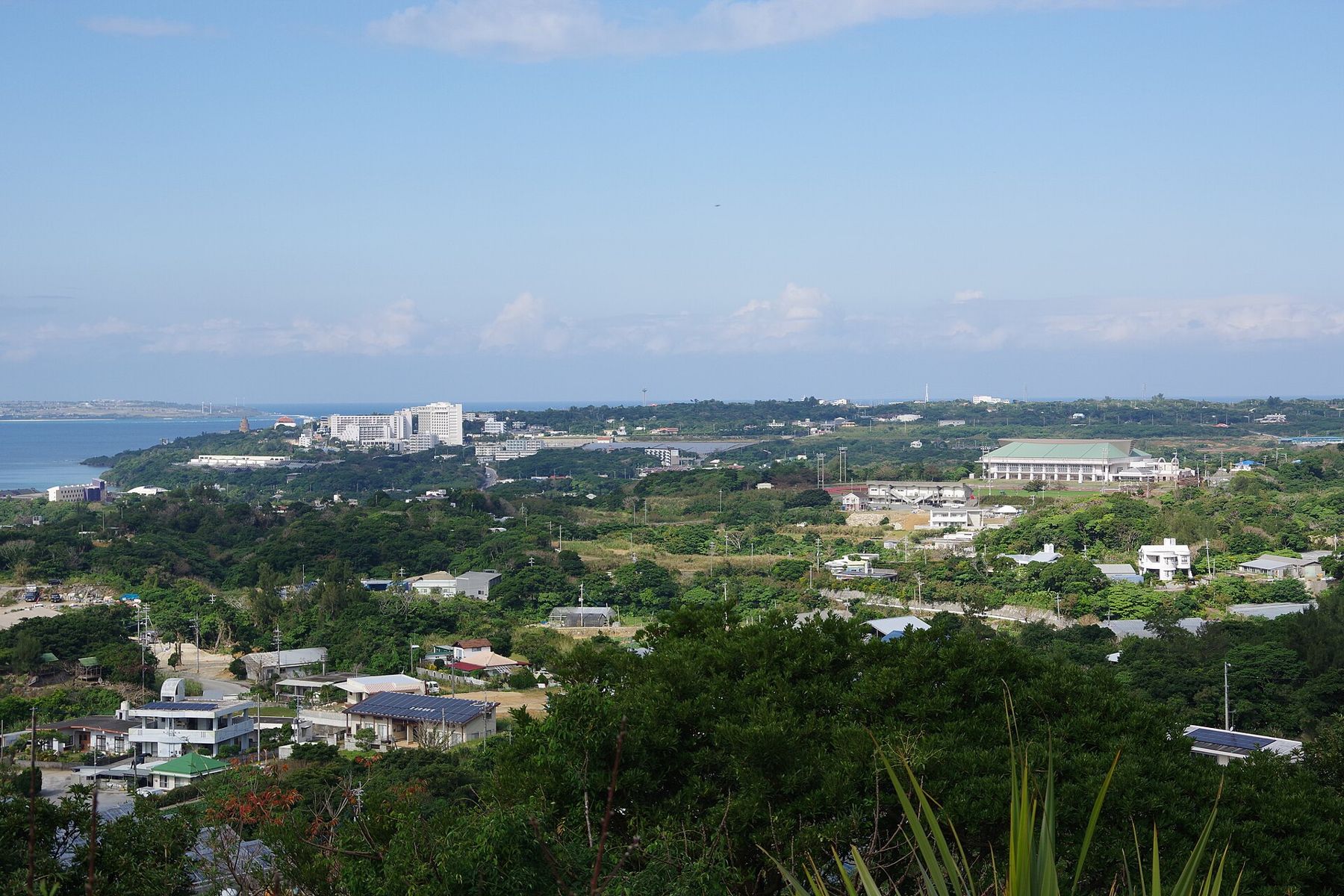
The Motobu Peninsula juts out from the west coast of Okinawa's main island, north of the town of Nago. In a single day you can walk the ruins of a medieval castle, wander lanes shaded by old trees, cross a bridge to a small island and swim from a white beach. It is the easiest corner of the north to reach from Naha, and for many visitors it is the highlight of the main island.
Nakijin Castle
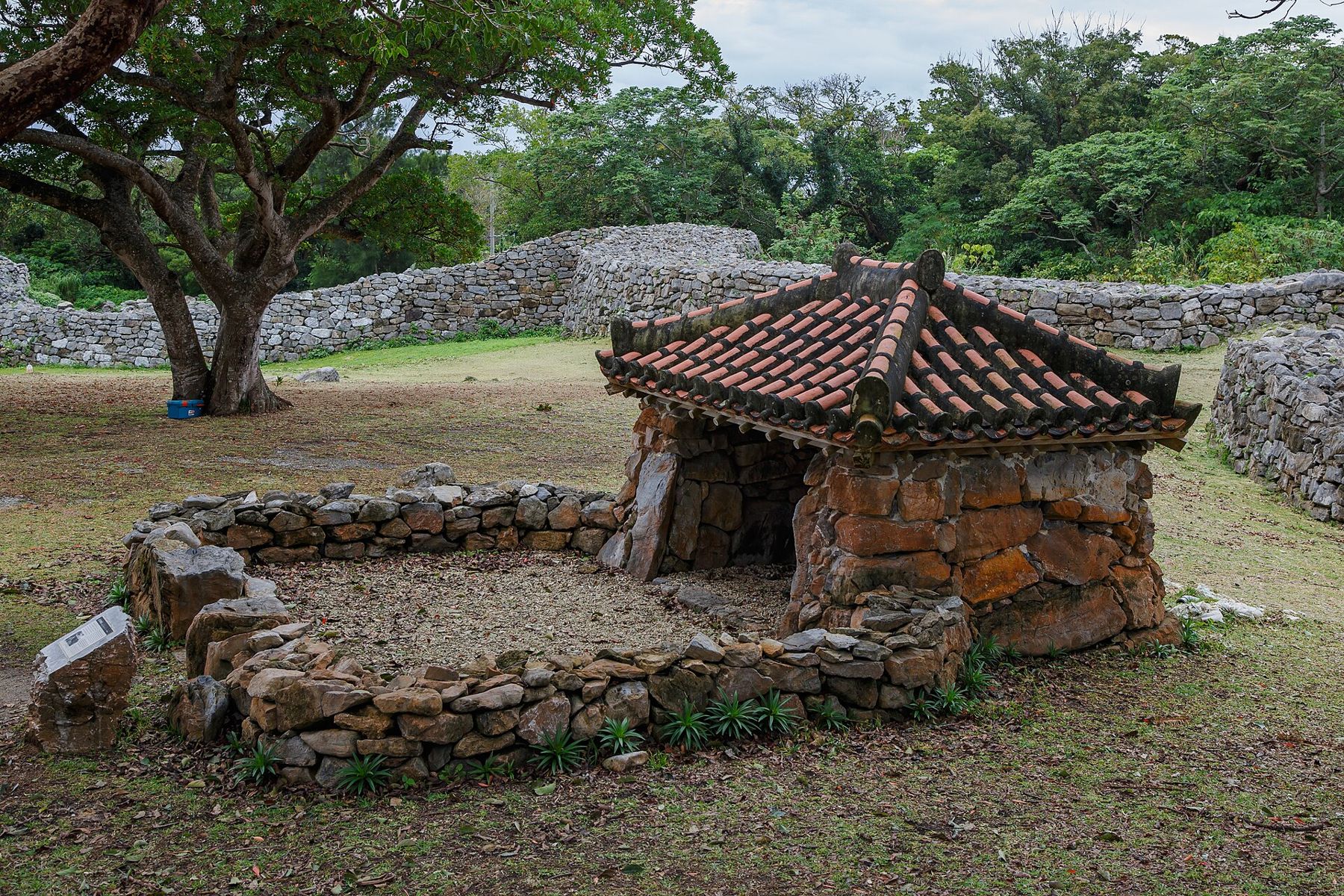
The ruins of Nakijin Gusuku stand on a ridge above the sea, enclosed by long, curving walls of grey limestone that follow the shape of the hill. Before the Ryukyu Kingdom was unified in the fifteenth century, Nakijin was the seat of the rulers of the northern part of the island, and it remained an important stronghold afterward. It is one of the Gusuku Sites inscribed by UNESCO as part of the heritage of the Ryukyu Kingdom.
Little survives inside but foundations and sacred places, but the walls themselves are magnificent, and the views over the East China Sea are wide. In late January and February, cherry trees along the approach flower in deep pink, among the earliest blossoms in Japan.
Bise and its fukugi lanes
The village of Bise, at the tip of the peninsula, is known for its lanes lined with fukugi trees, an evergreen planted around houses for centuries as a windbreak against typhoons. Some of the trees are very old, and their dense canopies make shaded green tunnels where the light falls in patches on the sand-coloured paths. It is a living village, so walk quietly, keep to the lanes and respect private homes.
Kouri Island
A long bridge, opened in 2005 and about two kilometres in length, crosses the shallow, brilliantly coloured sea from Yagaji Island to Kouri Island. The view from the bridge is one of the most photographed in Okinawa. Kouri is small, with beaches near the bridge end and a road around the island that takes only a few minutes to drive. A local legend links the island to the story of the first man and woman of Okinawa.
Ocean Expo Park
Ocean Expo Park was created on the site of the international ocean exposition held here in 1975, three years after Okinawa's return to Japan. It is a large public park with gardens, beaches, a reconstructed traditional village and a famous large aquarium. Some facilities inside charge entry and set their own hours. The park is busy at weekends and in school holidays.
Beaches and the sea
Main island, southShuri: stone walls and gates above NahaMonorail from central NahaThe peninsula has several beaches with clear water, especially around Bise and Kouri. Many guarded beaches put up nets against box jellyfish in the warmer months and post flags about swimming conditions. Swim only where it is permitted, never stand on coral, and take nothing from the reef.
Minna Island and Sesoko
Off the peninsula's west coast, the small, flat island of Minna is reached by a short boat ride from Motobu harbour in season. It has a white beach and shallow water and is popular with day-trippers in summer. Closer to the shore, Sesoko Island is joined to the peninsula by a bridge and has quieter beaches on its far side. Boats to Minna run mainly in the warmer months.
Cherry blossom in winter
Okinawa's cherry trees flower in winter, not spring. The deep pink blossom, quite different from the pale cherry of mainland Japan, usually appears from late January into February, starting in the north. The approach to Nakijin Castle and the slopes of Mount Yae on the peninsula are among the best places to see it, and festivals mark the season. It is a lovely time to visit, with cool air and quiet roads.
Nago, the gateway
The town of Nago, at the base of the peninsula, is the main centre of the north. It has a waterfront, markets and a large banyan tree in the old centre. Many people pass straight through, but it makes a convenient base for both the peninsula and Yanbaru.
The peninsula's coast road loops around its edge, with sea views most of the way. Stops at small fishing harbours and roadside viewpoints break up the drive. In the interior, Mount Yae and the low hills are covered in forest and farmland, with quiet roads that few visitors use.
If you have a second day, split the peninsula: the castle, Bise and the park on one day, and Kouri, Sesoko and the beaches on another. Staying in Nago or on the peninsula itself makes early starts easy and lets you see the fukugi lanes in the soft morning light, before the day visitors arrive.
Sunset over the East China Sea from Bise or Kouri is a fine way to end the day before the drive back south.
Shaping the day
From Naha, the expressway to Nago takes about an hour and a half, then the peninsula is a short drive west. Start at Nakijin in the morning, walk the Bise lanes before midday, then head to Kouri in the afternoon light. Allow a full day. Buses reach the main sights but are infrequent.
For the forest beyond, see Yanbaru, and for the kingdom whose castles dot the island, Shuri, above Naha. Check typhoon season if you are travelling in late summer.